

If you are a manufacturing or operations director in Southeast Asia, there is a reasonable chance someone has recently put China’s 15th Five-Year Plan in front of you as evidence that now is the time to move on robotics. The pitch is not wrong, exactly. But it is incomplete in a way that could cost you a capex cycle.
China’s plan frames industrial automation and humanoid robots under the same umbrella—”new quality productive forces”—governed by the same political language, eligible for the same funding mechanisms, and pointed at the same national transformation goals.
The framing is deliberate and effective at the macro level. At the procurement level, it creates a specific problem: the plan draws no meaningful line between what is deployable today and what is still being figured out.
That line is the operator’s job to draw.
The Stack That’s Ready
In 2024, China installed 295,000 industrial robots—54% of the global total—with a world record of 2 million units working in factories. Domestic brands now supply 58.5% of that market, up from 31.4% in 2020.
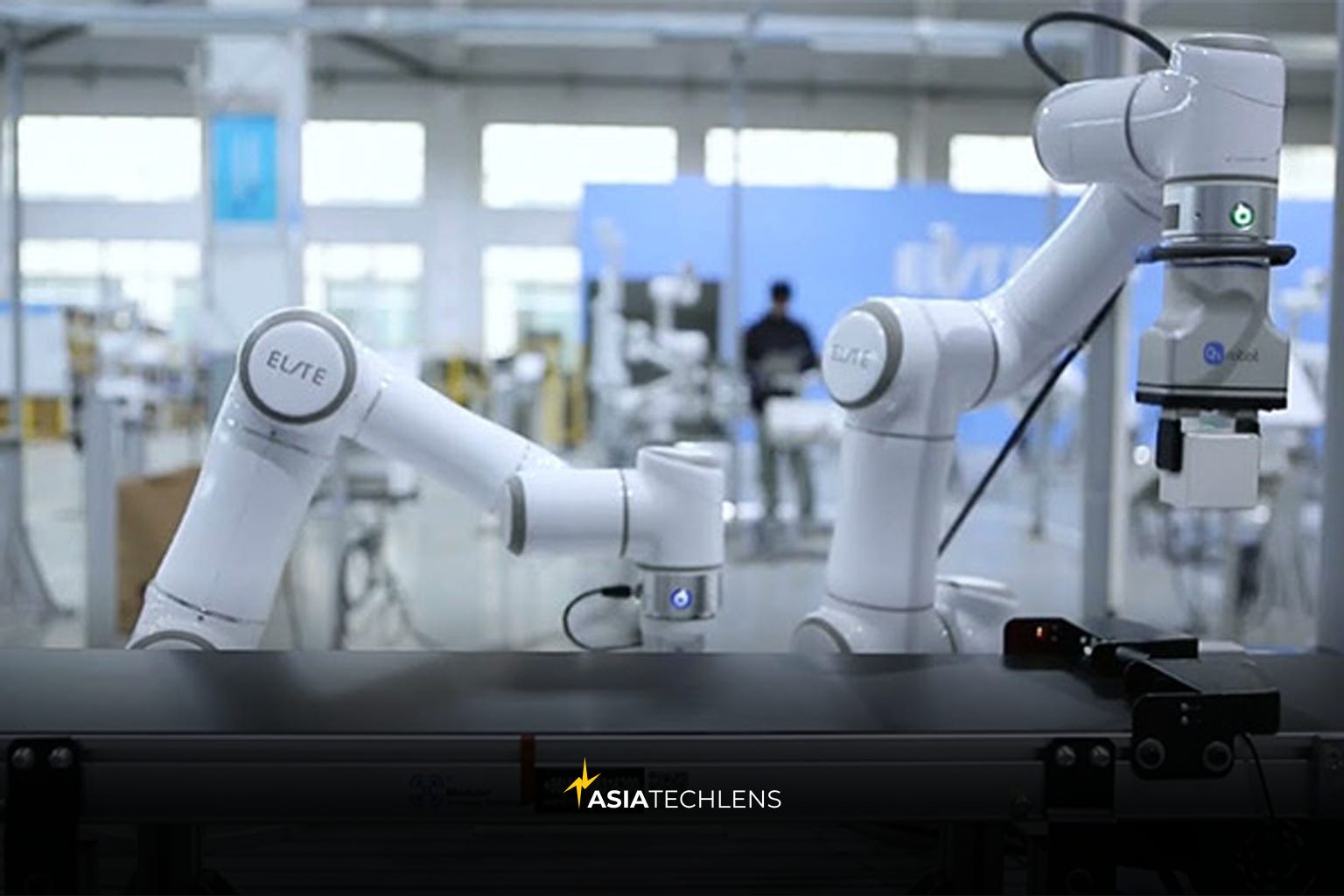
The ROI case for industrial robotics is well-established, with cobots—collaborative robots designed to work alongside humans on the same floor without safety caging—typically offering a payback period between 12 to 18 months.
For a manufacturing director, this is a procurement decision with quantifiable ROI available now. The 15th FYP is confirmation that China will keep compounding this advantage.
But “ready” does not mean frictionless.
Integration remains the constraint most operators underestimate. Retrofitting robotics into legacy production lines requires compatible control systems, reliable integrators, and carefully planned downtime. A cobot that performs well in a controlled demo still needs calibration against the variability of real factory inputs.
Trade policy is another variable emerging in the region. Some Southeast Asian markets are tightening scrutiny around Chinese industrial imports in sensitive sectors, and tariffs or certification delays can stretch deployment timelines. Even where trade barriers remain low, labor relations can complicate adoption when automation arrives in labor-intensive industries.
Even with a stack that works, successful deployments still depend on execution. The constraints are real but manageable. The question for most operators is not whether to engage this stack, but how quickly.
The Stack That Isn’t
The plan’s unified language covers humanoid robots with the same confidence. The deployment reality is categorically different.
Chinese firms shipped roughly 90% of the world’s humanoid robot units in 2025, according to research firm Omdia, led by AgiBot at 5,168 units and Unitree at over 4,200—though Unitree’s own reported figures put its total at 5,500. The numbers sound significant until context is applied: global humanoid robot shipments reached just 13,317 units in 2025 in total, and it remains unclear how many of those represent genuine commercial sales versus demonstration models or pilot deployments. The headline showcase deployments—UBTECH at Zeekr, for example—involve materials handling and quality inspection: tasks that purpose-built industrial arms already handle, often better and for less.
The technical constraints are specific and unresolved. Battery life is the hardest wall. Agility’s Digit, currently one of the first commercially deployed humanoids in the world, operates in warehouse environments with battery life reaching approximately four hours depending on task intensity. A standard factory shift runs eight to twelve hours. The gap requires either a charging rotation system or continuous human supervision, both of which erode the labor-saving economics being sold.
This is where the timeline question matters.
When operators say humanoids might become relevant in “18 to 24 months,” the claim is not about hype cycles. It refers to three concrete thresholds: first, whether machines can sustain something close to a full factory shift; second, whether unit economics support pilot-to-production conversion; and third, whether the vendor ecosystem stabilizes enough to trust multi-year procurement decisions.
Until at least some of those thresholds are crossed, humanoids remain a monitoring exercise rather than a deployment plan.
What Happens When Operators Don’t Separate Them
The risk is not theoretical. In November 2025, K-Scale Labs—a humanoid startup that had received over $2 million in orders, and launched two products—collapsed on the verge of mass production. The CEO cited failed financing and an out-of-control burn rate.
K-Scale is one data point, but the NDRC’s warning that over 150 humanoid companies are now competing in China on largely identical products suggests the consolidation risk is sector-wide.
For a director who has signed an MOU or committed integration resources to a humanoid vendor, this is vendor survival risk, not just product maturity risk.
The second failure mode is subtler. Key suppliers in China’s humanoid robot supply chain are making preemptive investments in production capacity ranging from 100,000 to 1 million robot-equivalent units annually—despite no company having confirmed large-scale orders or a clear production timeline.
A manufacturing director who runs a premature pilot off the back of that supply-side confidence doesn’t just lose the capex, they make it harder to get the next automation proposal approved internally.
That’s because when companies run pilots around immature technology, the cost rarely ends with the pilot budget itself. Engineering teams divert time from deployable automation projects to support experimental trials. Management attention shifts toward solving integration problems that cannot yet be solved. And when the pilot inevitably stalls, the experience often hardens internal skepticism toward robotics more broadly. A failed experiment becomes the board’s reference point the next time someone proposes automation spending, even if the next proposal involves technology that is already commercially proven.
Two Decision Tracks, Not One
The 15th FYP groups these two stacks together because that serves China’s industrial strategy. It does not resolve the decision a manufacturing director in Southeast Asia is actually facing.
Proven industrial automation in structured environments is a procurement decision for now. The ROI is quantifiable, the supply chain is mature, and the sourcing window is open. Operators who wait for the humanoid narrative to settle before moving on this risk losing ground to competitors who already have.
Humanoid robotics is a market to monitor, not a capex line item, for at least the next 18 to 24 months. Assign someone to track battery milestones, safety certification progress, and vendor order books.
Watch for a humanoid platform sustaining something close to an eight-hour operational cycle in a real production environment, not a staged demo. Watch for second-tier manufacturers—not just headline startups—entering serial production with confirmed customer orders. And watch for safety certification frameworks that allow legged robots to operate routinely in shared factory workspaces. Note when the constraints actually resolve. Don’t budget ahead of that.
Beijing’s plan is a credible signal of long-term strategic commitment to both. It is not a procurement signal for both. The plan doesn’t draw that line.
That’s your job.