

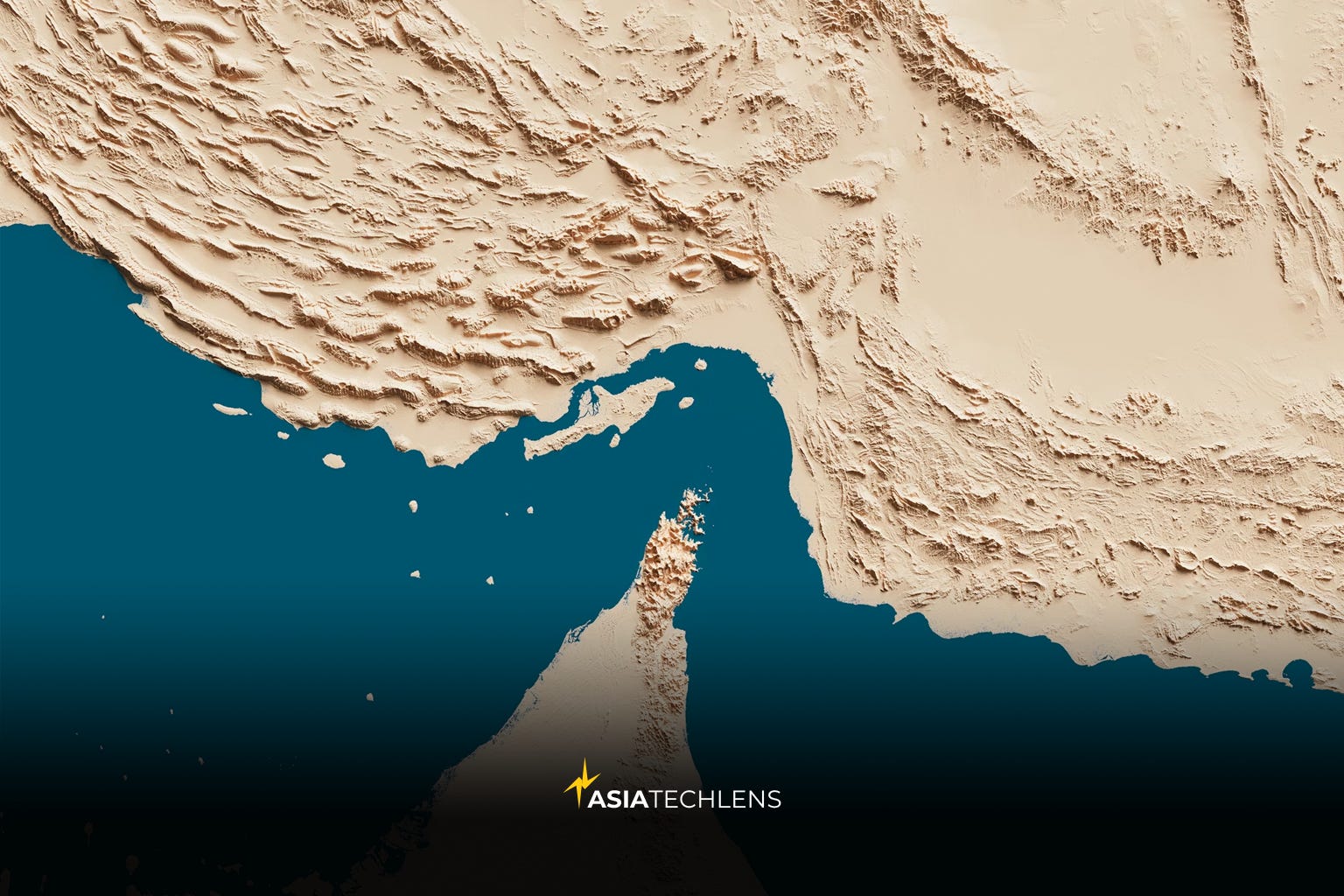
Nearly eight weeks after US-Israeli strikes on Iran effectively closed the Strait of Hormuz, most coverage has focused on oil prices, stranded tankers, and ceasefire negotiations. That is the visible story. There is a quieter one running underneath it.
The chemicals used to build battery cells trace back to petrochemicals that flow from Gulf refineries through the Strait of Hormuz. That supply is now effectively cut off. Prices have already moved sharply. But the more consequential impact arrives later, with a lag of several weeks between a feedstock disruption and a factory-floor shortage.
That lag is where the danger sits. Most battery and EV manufacturers across Asia are still running on inventory built before the crisis. The disruption feels distant, but it isn’t. And for procurement and operations leads at battery cell manufacturers and EV companies across the region, the window to act before that lag resolves is open now—and closing. If availability tightens, no amount of money resolves the problem quickly. The bottleneck becomes time.
The Chemicals Inside Every Battery Cell
The key components of a battery cell—the separator, the electrolyte solvent, and the binder—are all derived from petrochemicals. Most of these petrochemicals trace back to a raw material called naphtha. Asia’s petrochemical producers rely on the Middle East for 60 to 70% of their naphtha imports, most of which transits the Strait of Hormuz. When the strait effectively closed in early March, Gulf naphtha exports to Asia came to a halt.
The price signal arrived immediately. Naphtha was trading at around US$776 per metric ton before the disruption. It surged past US$1,000 at its peak and remains above US$870 today. But the more consequential number is the lag. When a feedstock like naphtha becomes difficult to source, the effect moves through the supply chain in stages—from refinery to petrochemical plant, from petrochemical plant to component manufacturer, from component manufacturer to battery cell maker. Asian petrochemical producers typically carry only a few weeks of naphtha inventory. The disruption began in late February. Factory-floor shortages were already visible by mid-March, and continue to deepen.
The problem is compounded by substitutability, or the lack of it. Switching to a different supplier or material isn’t just a procurement decision. It’s an engineering call as well. As Maithri Venkat, Battery Cell Technical Specialist at Lucid Motors, puts it, every single change to a cell must be scrutinized, because even a minor process change from a supplier can have unintended and severe impacts downstream. That scrutiny takes time that procurement teams don’t control. For operators who haven’t started that process, the window is already narrowing.
How Exposed You Are Depends on Where You Sit
South Korea is the most directly exposed manufacturing base in Asia to the current disruption. The country imports roughly 70% of its crude from the Middle East, with most of that transiting Hormuz. The impact is already visible on the ground: Yeochun NCC declared force majeure on naphtha supply in early April, with Lotte Chemical, LG Chem, and Hanwha Solutions all subsequently notifying customers of potential supply disruptions. For South Korean battery cell manufacturers sourcing petrochemical inputs from these suppliers, this is no longer a future risk. It is a current one.
China’s exposure is different in character but no less serious. Analysts estimate around 45% of China’s oil imports transit Hormuz—lower than South Korea’s share, but compounded by a geopolitical dimension that makes it harder to manage. In late March, Iran granted selective passage to vessels from a handful of nations including China, framing it as a diplomatic gesture toward non-hostile states. That arrangement has since collapsed. That brief window of selective passage was never a durable solution, and no operator should plan around it now. For Chinese manufacturers, the risk is not just cost inflation. It is that a deeply optimized supply chain is less flexible than it looks when upstream access turns unstable.
Japan moved earliest. Mitsubishi Chemical began cutting output within days, and Mitsui confirmed it was actively sourcing naphtha from non-Middle Eastern suppliers. That process costs more. Alternative naphtha from US Gulf Coast or Southeast Asian refiners carries a meaningful premium. But Japan’s early action bought optionality. If the disruption extends, Japanese manufacturers are already positioned. If it resolves sooner, they wind down the alternative contracts.
Across all three markets, the dividing line is simple: the manufacturers who know where their supply chain touches the Gulf are managing a problem. Those who don’t are walking into one.
The Decision Window
For procurement and operations leads across the region, one decision remains open, but not for long.
The choice is this: lock in alternative petrochemical supply now, at a visible premium, or hold and wait for Hormuz to normalize. The case for waiting has largely fallen away. Daily transits have collapsed back to near zero, against a pre-war average of 135. The ceasefire announced on April 8 collapsed within days, with Iran re-closing the strait on April 18 after the US refused to lift its blockade of Iranian ports. QatarEnergy has extended force majeure through at least mid-June 2026. Commercial normalization is not expected before July at the earliest, and only if US-Iran peace talks produce a concrete agreement.
The asymmetry is worth stating plainly. If you lock in alternative supply and the strait normalizes next month, you absorb a premium you can recover from. If you wait and the disruption extends through the second quarter, you face a shortage that money cannot solve quickly—because the constraint is not price, it is time. Production stoppages caused by input unavailability are not fixed with a larger purchase order. They require months of requalification work that should have started earlier.
The signal to act is simple: talks have stalled, the strait is shut, and your suppliers are starting to tell you they can’t guarantee delivery—not just that prices are up.
The Hormuz strait will reopen. When it does, the vulnerability it exposed will still be there. Asia’s battery and EV supply chains were built on Gulf petrochemicals long before this crisis. The manufacturers who use this window to map that exposure and build alternative sourcing relationships are fixing an assumption that was always fragile.
More from Asia Tech Lens
When Battery Economics Shift: What Gets Stress-Tested in China’s EV Strategy?
A look at what breaks when battery assumptions stop holding.
Not Just EVs: China Leads the World in Battery Production
A battery-first read on how chemistry, materials, and manufacturing scale shape competitiveness.
VinFast Pivots to Southeast Asia. But Can It Outrun BYD in Indonesia?
A piece on EV competition shaped by localization, industrial constraints, and execution risk.
The Chip War’s New Reality: A View from the Crossroads
A read on how geopolitical pressure reshapes commercial supply chains.
Asia’s High-Stakes Chip Game: What To Do When You’re Caught Between Washington and Beijing
A read on how geopolitical pressure turns cross-border chip dependency into an operating problem for Asian firms caught between the US and China.