

The first question governments must answer before writing billion-dollar checks for semiconductor fabrication plants is: Are we buying insurance or market share?
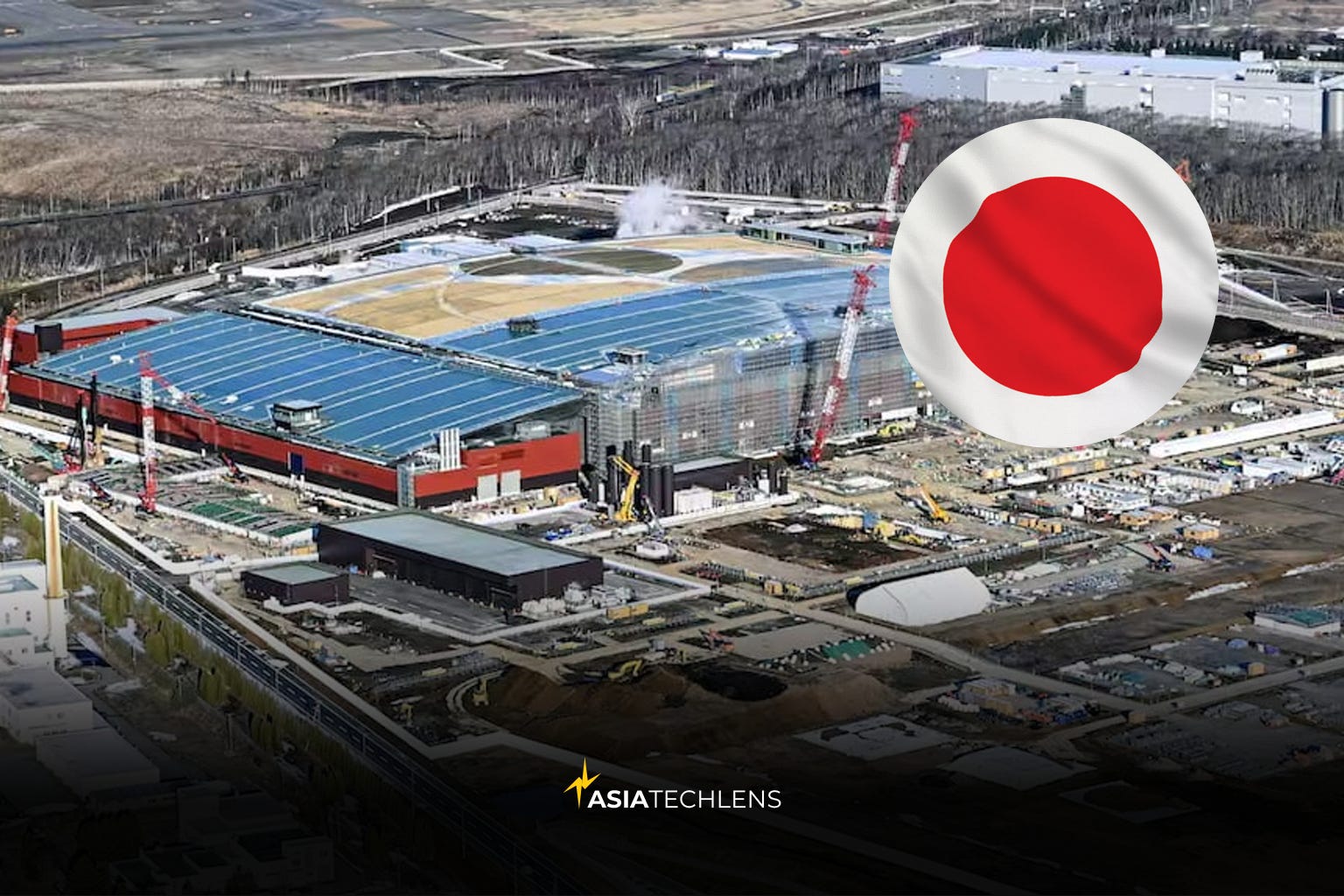
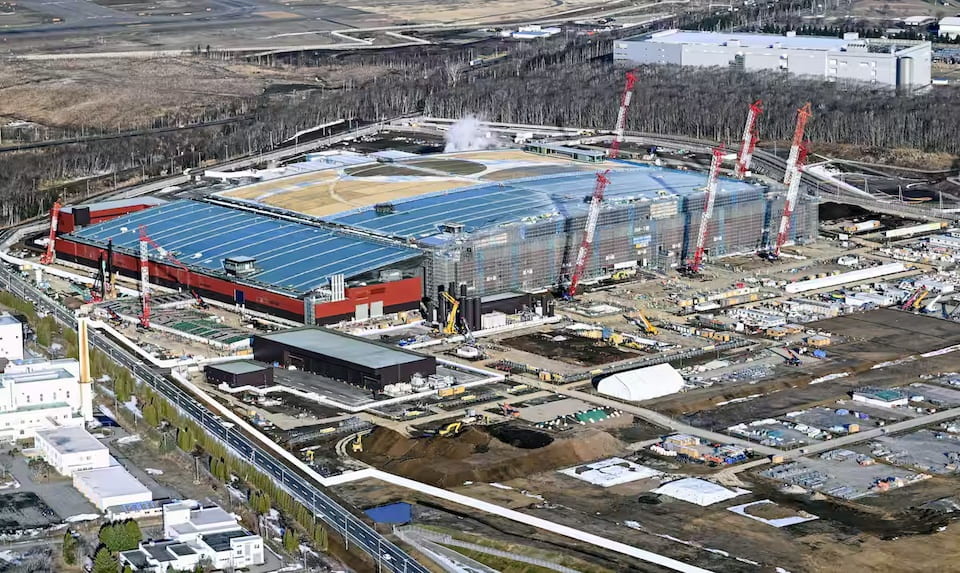
Japan’s Rapidus, founded in 2022 and backed by roughly US$18 billion in public funding commitments, offers a live case study in subsidy design. The company is building a leading-edge fab in Hokkaido and partnering with global technology players to re-enter advanced chip manufacturing. But the real question is not whether Rapidus can rival TSMC, the world’s largest semiconductor foundry. It is whether Japan is buying an insurance policy against geopolitical disruption or trying to reclaim global market share.
This article argues that Rapidus is a credible insurance bet only if subsidies also de-risk demand formation. That is to say, funding fabs alone is not enough. There needs to be large, long-term buyers whose demand allows Rapidus to grow sustainably.
Before diving into the specifics, operators should think in terms of a subsidy term sheet. What exactly is being subsidized: capex, ramp runway, or demand formation? Who are the anchor customers, and what are their volume commitments? Are disbursements tied to measurable milestones? Who bears downside risk if timelines slip? And what are the exit conditions if targets are missed? Will there be additional funding, restructuring, or termination?
These questions matter because semiconductor subsidies are not one-off grants. They are multi-year contracts with uncertain payoffs. Rapidus highlights how those contracts must be structured if the goal is resilience rather than nostalgia. (In the 1980s, Japanese companies commanded more than 50% of the global semiconductor market.)
Big Commitment, Layered Support
Rapidus’ funding illustrates how modern fab subsidies are layered rather than delivered as a single lump sum.
In Rapidus’ case, the Japanese government has provided the majority of financial support Rapidus has received—reaching a figure of around US$18 billion, according to one report. The figure is an accumulation of multiple rounds of funding, as the government continued to provide additional subsidies for the firm. On top of the direct subsidies, Rapidus is also a key beneficiary of Japan’s broader multiyear semiconductor and AI industrial policy envelope—a national plan valued at US$65 billion.
Private capital currently plays a secondary but growing role, in line with the calls for greater private capital contribution. As one financing scheme, Japanese private megabanks are devising staged loans totaling up to 2 trillion yen (about US$12 billion), provided from fiscal 2027, to support the mass production of cutting-edge chips.
Timelines matter as much as the money. Rapidus began its pilot-line preparations in 2025, and targets mass production of its 2nm chips by 2027. Public funding largely covers early phases, while private financing is expected to scale once production viability becomes clearer. Such sequencing is common: the state funds the highest-risk phase, and private capital steps in once technical and commercial risks are more measured.
But funding is only one side of the equation. It must go hand in hand with demand formation.
The Subsidy Term Sheet: What Operators Should Track
For policymakers and operators, the question is not only how much to spend, but what proof triggers the next tranche. A usable subsidy term sheet ties funding to observable execution milestones, not press timelines. In practice, that means staging support across three gates:
1) Technical readiness (prove the line works)
Pilot line live, with stable wafer starts and repeatable cycle times
Yield improving inside predefined bands (measured at agreed checkpoints)
Packaging and test flows qualified end-to-end for target products
2) Ecosystem readiness (prove customers can design for it)
Process design kit (PDK) mature enough for external customers to build against
First external tape-outs completed on the process
Design support, EDA/IP access, and reference flows in place to reduce migration risk
3) Commercial readiness (prove demand is real)
Anchor customers identified, with signed multi-year offtake that converts to binding volumes
A clear pricing / incentive structure that makes switching rational (not patriotic)
Defined downside allocation if milestones slip (who absorbs cost overruns, delays, and rework)
What Subsidies Can And Can’t Buy
Subsidies can buy a lot: land, buildings, and equipment. They can attract engineers. They can give a new fab the runway needed to reach initial volume. What subsidies can’t easily buy are real customers. You can build the factory, but you can’t force companies to use it.
A chip plant only works as a business once designers actually commit to making their chips there. For that to happen, the factory needs reliable design tools and support so customers feel safe moving their projects over. Several other conditions must be met: predictable timelines, competitive costs, and confidence that policy support will remain stable. Rapidus is still building that ecosystem, and until it’s ready, companies may hesitate to switch from established suppliers.
Demand is the flywheel. Without early customers and incentives to move over, even a well-funded factory can end up with empty production lines. The failure mode is well known: no demand leads to low utilization; low utilization raises unit costs; rising costs increase reliance on subsidies; and reliance on subsidies erodes credibility.
Credibility is another non-negotiable. Timeline slips and budget-cycle drift erode customer confidence faster than they erode political will. Semiconductor ramps span years, often outlasting election cycles and fiscal planning horizons. If funding disbursements pause or milestones shift, potential customers may delay or cancel commitments. The result is a negative feedback loop: lower demand undermines utilization, which weakens the business case for continued subsidies. Smart subsidy design therefore requires tranche releases tied to measurable execution milestones. In other words, governments should only release the next funding round when the factory hits concrete targets.
A Realistic Success
Ultimately, the success of a project like Rapidus depends on clarity of objectives. If the goal is to replace TSMC or capture large global market share, the subsidy required would be far larger and more sustained than current commitments. A more realistic and defensible goal is narrower: creating a bankable second source of advanced nodes for a small set of strategic customers. That means reliable capacity for key domestic industries and the ability to maintain production in the face of geopolitical disruptions. Under that definition, success does not require global dominance. It requires credible capacity, stable demand, and integration into the design ecosystem for a targeted customer base.
Framed this way, Rapidus is less a moonshot to revive Japan’s semiconductor glory than an insurance policy. Insurance policies are justified when they reduce systemic risk at an acceptable premium. But they only work if they cover the right contingencies. Funding fabs without funding demand formation risks building capacity that sits idle in normal times and proves insufficient in crises. Funding both supply and demand—through anchor customer commitments, ecosystem incentives, and milestone-tied disbursements—creates a more resilient outcome.
For policymakers and operators designing semiconductor subsidies today, the lesson from Rapidus is not simply how much to spend. It is how to structure subsidies so they purchase strategic resilience.
Related Reading On Asia Tech Lens
South Korea’s US$10 Billion AI Chip Deal with NVIDIA: A “Chimaek” Moment for Sovereign AI
How “sovereign AI” narratives collide with single-supplier dependency—and what that means for national compute strategy.Can South Korea Replicate Its K-Pop Success in AI Chips?
A grounded look at Korea’s AI-chip challengers and the real lever: efficiency + geopolitics, not hype.Asia’s High-Stakes Chip Game
A region-wide operator view of how countries are positioning across fabs, packaging/testing, and “reliable partner” strategy under geopolitics.Invisible Arteries: Subsea Cables in the Age of AI
The physical bottleneck story behind “resilience”: how cables quietly determine latency, redundancy, and where AI can scale.A sovereignty-as-supply-chain framework: where dependence actually sits (chips/compute/cloud/energy) and how operators should plan around chokepoints.