

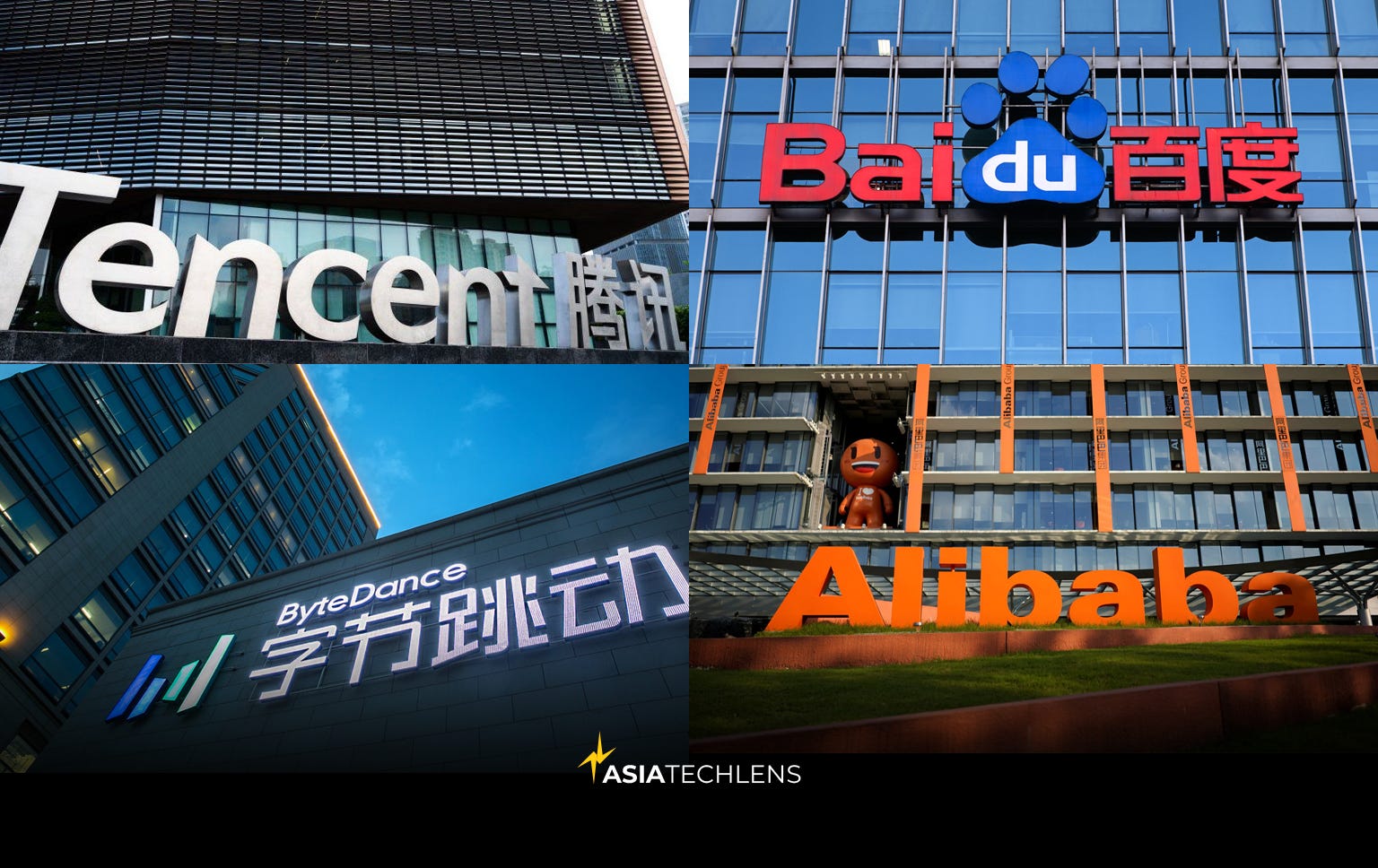
For China’s tech giants, the CCTV Spring Festival Gala is a once-a-year distribution super node. It is the closest thing China has to the Super Bowl, and the sponsorship optics carry institutional weight in a system where industrial priorities are set from the top. The Gala made that subtext visible. Humanoid robots were not a side act. It signaled what platforms want to be associated with: industrial capability, not just consumer entertainment.
While robots took center stage on screen, a parallel battle ran underneath it in the infrastructure layer. ByteDance’s Volcano Engine secured an ‘exclusive AI cloud partnership’ for the 2026 Gala, following Alibaba Cloud’s exclusive cloud-and-AI role for the 2025 show. That matters in a market where demand for AI workloads is rising and cloud competition is tightening. In AI, the company that wins the infrastructure relationship can shape the rest of the lifecycle, from deployment and performance to cost, distribution, and commercial leverage.
The Gala is also the sharpest peak in a wider Lunar New Year campaign window that stretches across late January through February, where red packets, perks, and sharing mechanics are used to force trial at scale and test who stays once incentives fade. Asha Hemrajani, Senior Fellow, S. Rajaratnam School of International Studies at Nanyang Technological University, sees it as a sign that consumer AI is moving into what she calls the age of “agentic commerce,” shifting from assistants that respond to queries to systems that “act on the consumer/customer’s behalf,” including automating decisions about what to buy.
The shift in tone is hard to miss. After years of talking up cost-cutting and efficiency, the biggest platforms are back to paying for behavior change. Liang Chen, an associate professor of strategy and entrepreneurship at Singapore Management University, calls the giveaways “a subsidy on user behavior,” arguing the companies are “buying the right to be users’ default interface for the next decade.”
That bet is now visible in the incentive pools and the distribution mechanics. Alibaba’s Lunar New Year campaign, launched on February 6, will distribute RMB 3 billion (US$431 million) in incentives through Qwen. It has packaged the push around high-frequency consumption, including AI-driven ordering for everyday services. Tencent put RMB 1 billion (about US$140 million) behind Yuanbao’s cash red-packet campaign. Alongside the incentives, Tencent promoted Yuanbao PAI, a group-based feature built for coordination and shared use. Think of it as a shared “room” rather than a chat thread: users join a PAI space and the assistant participates in the group, designed to reduce friction in multi-person planning through quick summaries, reminders and timed updates, while also enabling lightweight creative generation that can be shared back into the group. Baidu is running an RMB 500 million (about US$70 million) incentive programme to pull users into its assistant experience over a longer window. ByteDance is anchoring its push on the Gala’s credibility stage through Volcano Engine, alongside a broader Doubao holiday promotion drive.
“The re-ignition is driven by three factors: peak traffic anxiety, as traditional mobile internet growth is dead; the threat of disruption. The giants are terrified of missing the “AI-native” generation of users and are using the Spring Festival—China’s biggest attention window—as a brute-force attempt to buy user habits, just as WeChat did with mobile payments in 2015.”
- Ashley Dudarenok, China digital expert, author, and keynote speaker
That “brute force” matters because the real goal is to change what people do every day. If an AI assistant becomes the first place people go to ask a question, plan something, or trigger an action, it starts to function like a new interface layer on top of apps. Steven Hoffman, the Chairman & CEO of Founders Space, who tracks platform strategy in China, says the harder part is keeping users engaged once the giveaways stop and the novelty wears off.
The winner among them will be the one that can turn a Chinese New Year download spike into a daily routine, by making its AI feel like the easiest, most natural way to get things done.
From Territory Wars to Gateway Wars
China’s platforms have fought brutal battles before. Ride hailing, food delivery, e-commerce, short video, payments. Those wars were about owning a vertical. Liang Chen, Associate Professor of Strategy & Entrepreneurship at Singapore Management University, says this round is different because it targets the layer above the verticals.
Liang describes this round as “a battle for the gateway.” If one player becomes the default AI entry point, it can start routing users into everything else, effectively brokering traffic and transactions across other apps and services. He compares it to earlier distribution resets created by control of the entry layer, from WeChat’s super-app gravity to Google’s Android advantage.
He says “the Spring Festival provides a window for resetting user behavior” when hundreds of millions of people pause routines at the same time. That pause creates a brief opportunity to install new behaviors quickly. In that sense, the subsidies are a temporary discount on habit change, buying the first wave of trial at national scale.
Liang argues the real goal is a forced migration from ‘search’ to ‘agent,’ paying for the first-mover chance to become the next operating system rather than just another app.
Ashley Dudarenok argues Chinese New Year is exposing a shift in what companies are building. “This Spring Festival marks the death of ‘AI as a feature,’” she says. The big spend is pushing standalone assistants toward habit formation, with integration into everyday workflows as the differentiator, from commerce use cases like Qwen’s ordering hooks to social coordination features like Yuanbao PAI.
Four Plays, Four “DNAs”
The giveaway war may look uniform on the surface, but the strategies underneath are not.
“Each company is playing to its unique strengths, revealing their core DNA,” Ashley Dudarenok says.
ByteDance (Doubao): Ashley Dudarenok says ByteDance is “all about platform independence,” using Douyin and its CCTV tie-up to bypass rival ecosystems. The Gala badge matters here. Volcano Engine, ByteDance’s cloud arm, was named the show’s exclusive AI cloud partner, a signal that ByteDance can run national-scale AI workloads on its own stack rather than renting credibility from someone else’s ecosystem. Alongside that infrastructure flex, ByteDance used the holiday window to push product momentum. It promoted Seedance 2.0, its AI video-generation model, as a marquee capability inside Doubao, reinforcing the message that Doubao is not just another chatbot, but an interface for creating and doing. Beyond these headlines, ByteDance also ran a broader Lunar New Year giveaway push to drive trial and sharing at scale.
Alibaba (Qwen): As per Ashley, Alibaba is focused on “consumption integration,” tying AI to real-world transactions so it feels immediately useful. That’s why it has put RMB 3 billion (about US$431 million) behind Qwen. The simplest way to see it is this: Qwen is being pushed less as a chatbot and more as a tool that can trigger a real purchase. The proof point is the milk-tea giveaway. Within hours of launch, the surge pushed Qwen past Tencent’s Yuanbao to the top of China’s Apple App Store free chart. Alibaba’s Qwen team said more than 10 million free orders were placed within nine hours, using vouchers capped at 25 yuan. The spike overwhelmed many stores, with users reporting overload and disruption as traffic surged.
Tencent (Yuanbao): Ashley calls Tencent’s approach “the most nuanced play,” because its real edge is not a bigger model, but AI + social. Tencent put RMB 1 billion behind Yuanbao’s cash red-packet campaign. In figures released on Feb 18, Tencent said Yuanbao’s daily active users (DAU) exceeded 50 million and monthly active users (MAU) reached 114 million, with users participating in more than 3.6 billion lucky draws and making over 1 billion AI creations. But Tencent is trying to make sure Yuanbao is remembered for more than cash. That is where Yuanbao PAI comes in: a group feature built around shared activity rather than solo prompting. PAI is closer to a shared room than a chat thread, designed for coordination and group utility, from lightweight recaps and timed info drops to simple creative outputs that can be generated and shared in-context. The architecture is the tell. Tencent is not dropping an AI bot directly into WeChat group chats as a visible participant. It is ringfencing the experiment inside Yuanbao, using PAI as a bridge to Tencent’s social graph without risking backlash inside its core messaging product. Steven Hoffman argues that is precisely the advantage: “the big advantage of Yuanbao PAI is that it is literally injecting AI into the space where people live, communicate, socialize, and do everything they need to get done.” But he also flags the constraint: in group spaces, AI can feel intrusive fast. If Tencent wins this round, it will be by finding a workable social contract for AI in groups, useful enough to reduce friction, quiet enough to keep the conversation human.
Baidu: Ashley describes Baidu as being on a “quiet scale quest.” With RMB 500 million behind its holiday push, Baidu is trying to convert existing habits into AI habits through a spread of seasonal features and incentives. This push is built for endurance. Baidu’s rewards run from January 26 to March 12, with prizes up to 10,000 yuan, and the company is bundling the push into the Baidu App via nearly a hundred Spring Festival-themed activities tied to the Beijing Radio and Television Spring Festival Gala. What makes Baidu different is the installed base it is trying to redirect. The Ernie AI Assistant has reportedly surpassed 200 million monthly active users, embedded inside Baidu’s core surfaces and connected into services such as JD.com, Meituan and Trip.com. Baidu is betting that distribution plus integration can outlast the holiday spike.
The Retention Cliff
The red packets are doing what they have always done in China’s internet wars. They pull people through the door fast. The harder part starts when the door prize disappears.
Ashley Dudarenok calls the escalation a warning sign in itself. “Firstly, incentive inflation,” she says. “The budget escalated from RMB 500 million to RMB 3 billion in a matter of days. This is an unsustainable subsidy war.” The spending can force trial quickly, but it also sets a trap: if users arrive for the prize rather than the product, they leave the same way.
Steven Hoffman is even more direct about what happens after the holiday glow fades. “People will try it out,” he says, “but they won’t see the value there, and then they will revert to doing what they did before.” In his view, the deepest challenge is not distribution. It is the fact that “what people really want and what you think they want are often two entirely different things.” The Spring Festival window can manufacture curiosity, but it cannot manufacture conviction.
That gap is especially sharp in social settings, where platforms can’t afford to break the vibe. “In these group chats, people don’t really want AI interfering,” Hoffman says. “They don’t want AI taking a lead role.” That, in his view, is why Tencent is proceeding cautiously rather than pushing a fully integrated experience too fast.
The Cost of Failure
The second half of the story is not only about retention. It is about risk.
Asha Hemrajani worries most about transaction-heavy workflows because one small error can spread. She points to a pattern described by OWASP, a widely used set of application-security guidelines: “Cascading Failures,” where a single initial error, “from a malicious prompt injection, a bug in the agent, or a misunderstanding of the end-user’s command,” can propagate across multiple systems before a human has the chance to intervene. She also flags “deliberate or accidental leakage of sensitive personal information which can then be used to propagate other crimes such as scams.”
Trust constraints are not limited to transaction safety. They also extend to provenance and rights in generative media. ByteDance’s Seedance 2.0 drew attention for its capabilities, but also sparked controversy over training data and content similarity claims, a reminder that create features can turn into governance and reputational liabilities.
In other words, the moment the assistant can place an order, move money, or trigger services, trust becomes a hard gate. If users believe the system can misfire at speed, they stop delegating. At that point, no incentive pool can buy them back.
Hemrajani adds that if these consumer AI playbooks are exported into Southeast Asia, the dependency question becomes political as well as technical. Chinese apps remain subject to China’s cyber and data laws, including the National Intelligence Law, which has shaped regional scrutiny over data access and sovereignty.
Liang Chen adds a different kind of constraint, one that does not show up on App Store charts. He argues the strategic risk is building a massive user base that is economically negative to serve because inference costs are variable. Unlike traditional apps, where serving an extra user is close to free, AI usage scales with cost. If a platform buys a user base that is there for rewards rather than real demand for the intelligence, it can end up carrying high servicing costs without durable value in return.
Regulation Is Tightening the Arena
Hemrajani’s view is that this consumer AI escalation is also happening in a narrower arena. She points to two concrete signals: “In September 2025, the Chinese State Administration for Market Regulation (SAMR) intervened in the food delivery marketplace and warned e-commerce platforms about too high subsidies. In January 2026, Chinese regulator banned platforms from forcing their online merchants to launch promos and give discounts. This new rule is effective this month (February). The aim of these new regulations is to cool down intense competition between the platforms. There is good reason to do so because this intense competition has been eating into the profit margins of these platforms and thus has a deflationary impact on the Chinese economy.”
This is why she reads the AI app push as more than product ambition. “These platforms launching AI apps is yet another escalation in their battle for market share,” she says, “given that other routes have been closed to them due to new government regulations.”
What to Watch After the Festivities End
The subsidies cannot last forever. There is a definite spike right now because the incentives and attention are concentrated, but that limited-time surge alone doesn’t prove the plan worked.
What matters is what usage looks like when the festival ends and routine returns. Ashley Dudarenok says she would watch for a retention cliff, warning that Spring Festival incentive apps have historically seen very low carryover, sometimes dropping to single-digit retention after the first week.
Her scoreboard is simple:
DAU/MAU ratio: the stickiness score. Does daily usage hold up, or does it collapse once the holiday rush passes?
Session frequency: are users opening the app multiple times a day for different tasks, or just once to check for leftover rewards?
Core feature engagement: what share of daily users are actually using the assistant’s capabilities rather than spending most of their time in the rewards layer? If the traffic stays concentrated in red packet mechanics, Dudarenok warns, “you haven’t built an AI product; you’ve built a temporary casino.”
Liang Chen frames the same test in behavioral terms. Look for longer, more complex interactions, not just quick prompts. Look for evidence that queries lead to completed actions inside the ecosystem, not dead-end chat. And watch whether usage holds after people return to work, when patience drops and utility has to be obvious.
In Liang’s view, retention will not come from social virality but from integration depth. The agent that holds payment credentials, knows your location, and has a history of successful transactions becomes hard to replace.
If this holiday sprint shows anything, it is that China’s platforms can still manufacture mass trial on command. What they cannot manufacture is habit. That has to be earned after the festival ends, when users return to normal routines and start judging these assistants on whether they save time, reduce friction, and complete tasks reliably.
The direction of travel is clear. Consumer AI is shifting from being something people talk to, toward something people delegate to. That shift concentrates power in the layer that can turn intent into action safely, across payments, services, and coordination, without breaking trust.
The next few months will decide whether this was a seasonal spike or the start of a new default. The winner will not be the platform that bought the most attention. It will be the one that users keep opening when there is nothing left to collect.
Related Reading On Asia Tech Lens
What Tencent’s “Yuanbao PAI” Reveals About Its AI Strategy
Why Tencent is testing “social AI” during Spring Festival; explains how group coordination features could turn AI into a daily habit layer.
AI for Global Equity Begins With Local Realities
Why the hardest AI problems are trust, language, and deployment, and why “responsible” starts with real user constraints.Thailand’s Digital Transformation
A ground-level look at how platforms, payments, and infrastructure shape adoption, and how China-linked tech shows up in everyday systems.Inside China’s Bold Push to Build Humanoid Robots
Why humanoids are becoming an industrial signal; looks at policy support, public demos, and the race to move from spectacle to scale.Plush, Playful, and Powered by AI: How China’s Toys Are Evolving
Why China’s AI-toy boom matters for consumer adoption; compares China’s fast product cycles with a more cautious Western approach.Why Southeast Asia’s Super Apps Won’t Look Like China’s
Why WeChat-style dominance is hard to copy, and why distribution in SEA looks more fragmented, regulated, and competitive.
The framing of this as a gateway war rather than an app race is really sharp. The point about inference costs scaling with usage is something I don't see discussed enough — buying a massive user base that's economically negative to serve is a real trap. Curious whether the retention numbers post-festival will look anything like the WeChat Payments playbook from 2015, or if AI assistants are just too hard to make sticky without genuine utility loops.